
Book Analysis: There Is No B2B or B2C. It’s Human to Human (H2H) By Bryan Kramer
Executive Overview
Bryan Kramer’s Human to Human (H2H) challenges one of the most ingrained concepts in marketing:
That businesses sell to “businesses” or “consumers.”
His thesis is simple and radical:
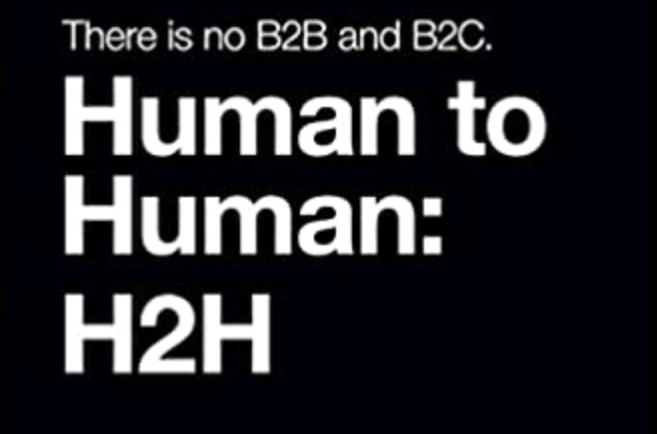
There is no B2B.
There is no B2C.
There is only H2H — Human to Human.
Behind every decision, contract, purchase order, subscription, and click…
There is a person.
And that person responds to:
• Emotion
• Empathy
• Simplicity
• Authenticity
• Trust
The book is short, direct, and philosophical rather than tactical. It aims to reset mindset, not provide a campaign blueprint.
Core Thesis
Marketing frameworks have overcomplicated something fundamentally simple:
People buy from people.
Even in enterprise sales.
Even in corporate procurement.
Even in complex, multi-layered decision processes.
The illusion of B2B removes humanity.
H2H restores it.
Kramer argues that:
The more digital we become, the more human we must act.
This is especially relevant in today’s AI-driven environment.
Key Themes in Detail
1. Humanization Over Segmentation
Traditional marketing categorizes audiences:
B2B = logic-driven buyers
B2C = emotion-driven buyers
Kramer dismantles this distinction.
All buying decisions contain emotion.
All buyers seek connection.
All humans want to feel understood.
Even a CEO signing a 7-figure contract:
Still fears risk.
Still wants trust.
Still values simplicity.
This reframing is powerful for coaches and entrepreneurs who overcomplicate positioning.
2. Imperfection Builds Trust
One of Kramer’s strongest arguments:
Perfection is distancing.
Imperfect, authentic communication builds relatability.
He encourages brands to:
• Show vulnerability
• Be conversational
• Avoid corporate language
• Reduce jargon
This is directly aligned with permission-based marketing philosophy often associated with Seth Godin.
People grant attention when they feel seen.
3. Social Media as Human Platform (Not Broadcast Channel)
Kramer emphasizes:
Social platforms are not megaphones.
They are conversation spaces.
Many brands broadcast.
Few engage.
H2H requires:
• Listening
• Responding
• Participating
• Acknowledging
This is a key insight for small-audience coaches stuck in passive posting.
Posting ≠ connecting.
Conversation = connecting.
4. Empathy as Strategic Advantage
Empathy is not softness.
It is leverage.
Understanding emotional context:
• Reduces friction
• Increases clarity
• Builds loyalty
• Shortens sales cycles
In H2H thinking, empathy is competitive advantage.
5. Simplicity Over Corporate Complexity
Corporate messaging tends to be:
• Buzzword heavy
• Feature focused
• Impersonal
• Abstract
Kramer pushes for simplicity.
Speak like a human.
Write like you talk.
Be clear, not clever.
This is crucial for coaches who hide behind vague language.
Strengths of the Book
- Clear and memorable thesis
H2H is sticky and easy to internalize. - Timeless principle
Humanity does not go out of date. - Strong mindset shift
It reframes how you think about audience entirely. - Accessible and digestible
Easy to read, easy to apply.
Limitations
- Not deeply tactical
It inspires but doesn’t provide step-by-step systems. - Enterprise examples dominate
Some examples lean toward corporate marketing contexts. - Does not deeply explore data or AI mechanics
It’s human-first, not tech-detailed.
It pairs well with execution frameworks like those popularized by Alex Hormozi, which provide mechanical clarity.
Strategic Implications for Small-Audience Coaches
This is where it becomes powerful.
If you’re under 1,000 followers:
You do not need more segmentation.
You need more conversation.
H2H reinforces:
• DM outreach works.
• Voice notes convert.
• Workshops build trust.
• Referral loops multiply impact.
• Direct invitations are not “salesy” — they are human.
Passive content marketing ignores H2H.
Active outreach embodies it.
H2H in the Age of AI
This is where Kramer’s philosophy becomes even more relevant today.
As AI increases:
• Content volume rises.
• Automation expands.
• Personalization scales.
But humanity becomes scarce.
Scarcity creates value.
The more automated the world becomes,
the more human brands win.
This aligns perfectly with:
AI for speed.
Humans for sales.
Automation should handle:
• Drafting
• Data
• Structure
Humans handle:
• Emotion
• Trust
• Nuance
• Commitment
Comparison to Human-Centered Marketing
Ashley Faus focuses on strategy in the AI era.
Bryan Kramer focuses on philosophy of connection.
Faus = operational framework.
Kramer = mindset reset.
Together they create:
Human-first strategy.
Human-first execution.
Human-first messaging.
Practical Application to the Anti-Passive Launch System
The Anti-Passive Launch System is H2H operationalized.
Instead of:
“Build funnels.”
It says:
“Talk to people.”
Instead of:
“Optimize for impressions.”
It says:
“Build trust.”
Instead of:
“Segment audiences.”
It says:
“Name humans.”
H2H validates proximity-first marketing.
Final Evaluation
Intellectual Depth: Moderate
Mindset Impact: High
Tactical Instruction: Light
Relevance in AI Era: Very High
Overall:
H2H is not a launch manual.
It is a philosophical correction.
It reminds us that behind every metric is a human being.
And for small-audience entrepreneurs, that reminder is gold.