Basic Needs Met | THE INDONESIA VS. AUSTRALIA LESSON
Why sovereignty, community, regenerative assets, and decentralised systems matter in 2025 and beyond
During the pandemic, I witnessed two completely different human experiences playing out at the same time.
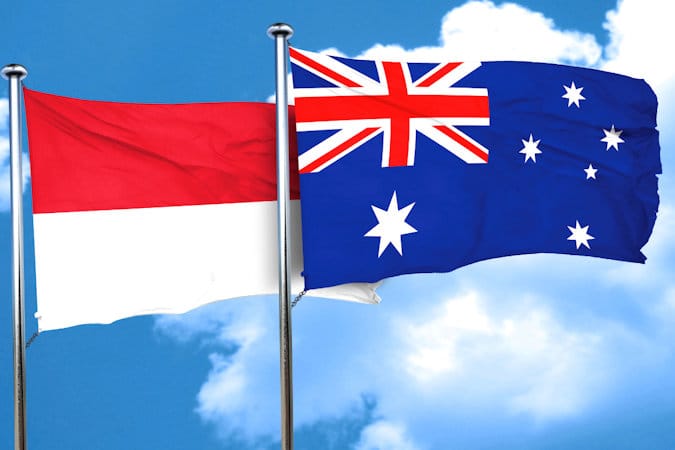
One was happening in Indonesia, a developing country with low wages, little formal financial infrastructure, minimal government support, and almost no access to traditional credit.
The other was happening in Australia, a wealthy nation with high salaries, strong institutions, and one of the most generous government support systems in the world.
And yet — the country with far less money experienced far more stability, wellbeing, and resilience.
Here’s why.
1. INDONESIA: A REGENERATIVE COMMUNITY ECONOMY
Even as wages dropped below USD $100/month, basic needs were still met.
Why?
Because most families had:
- no mortgages
- no credit card debt
- land they stewarded
- multi‑generational households
- community‑based food systems
- a culture of sharing and mutual support
- informal, trust‑based economies
Their wealth wasn’t in banks — it was in:
- relationships
- community contribution
- land and soil
- food systems
- shared responsibility
- cultural traditions
- interdependence
Even when cash disappeared, life continued.
People:
- grew food
- shared meals
- supported neighbours
- cared for elders
- lived slowly
- stayed connected
Even with low wages, they were sovereign.
Their wellbeing did not collapse because the global financial system hiccuped.
2. AUSTRALIA: A HIGH-INCOME, DEBT-DEPENDENT SYSTEM
Meanwhile, in Australia — people were being paid $700 per week to stay home.
On paper, this looks like abundance.
In reality, it revealed a deep systemic fragility.
Because so many people relied on:
- high mortgages
- consumer credit
- car loans
- personal debt
- rental pressure
- suburban isolation
…even with government income support, they couldn’t meet the basics.
People suffered:
- rising anxiety
- severe isolation
- skyrocketing depression
- loss of community connection
- financial stress
- collapse of small businesses
People with decades-old assets were forced to sell them at a loss simply to stay afloat.
Their lives were organised around debt, obligation, and dependence on external systems.
When those systems trembled — so did their wellbeing.
THE LESSON: REAL WEALTH IS NOT MONEY — IT IS RESILIENCE.
The pandemic showed us something we can’t unsee:
Wealth built on:
• debt
• institutions
• jobs
• centralized systems
• fragile supply chains
…is not true wealth.
Wealth built on:
• land
• relationships
• food systems
• skills
• health
• community
• cultural cohesion
…can survive almost anything.
Indonesia’s low-income communities were more sovereign, stable, and grounded than many wealthy Western families — because their basic needs were not intermediated by financial systems.
HOW THIS CONNECTS TO 2025–2035 TRENDS
The world is shifting fast.
We’re entering a decade where:
1. AI + automation will eliminate millions of traditional jobs
People will need to build creator ecosystems, not rely on employment.
2. Wellness tech + soul tech will become foundational
Mental health, nervous system regulation, and community practices will be non‑negotiable.
3. Regenerative assets will outperform extractive ones
Land, water rights, renewable energy, biodiversity, and carbon removal will become primary wealth generators.
4. Cryptocurrencies + decentralised value networks will become normal
Communities will have:
- community tokens
- contribution-based reward systems
- local sovereign funds
- peer‑to‑peer value exchange
5. Experience-based economies will grow
Retreats, gatherings, workshops, embodiment, and transformation spaces become core industries.
6. Micro-communities + villages return
People will prioritize:
- shared land
- cooperative housing
- regenerative food systems
- community-owned energy
- sovereign education networks
7. Financial sovereignty becomes a human necessity
Not a luxury.
THE FUTURE BELONGS TO THOSE WHO:
✔ Own or steward productive land
✔ Build regenerative assets, not consumptive ones
✔ Grow their own food or plug into local food webs
✔ Use AI as a creative multiplier
✔ Build digital IP that compounds
✔ Participate in community-based economies
✔ Hold appreciating digital assets (BTC, ETH, SOL, regeneration tokens)
✔ Are not dependent on fragile systems for basic needs
This is how you create a life you can pass on to future generations — a life based on sovereignty, not survival.
THE 100-YEAR LESSON
The West optimized for:
convenience → consumption → individualism → debt
Traditional communities optimized for:
connection → contribution → land → resilience → sovereignty
In a destabilizing world, the second model wins every time.