
What Skool Really Is (And What It Isn’t) | Lifestyle Medicine & CoCreator Academy
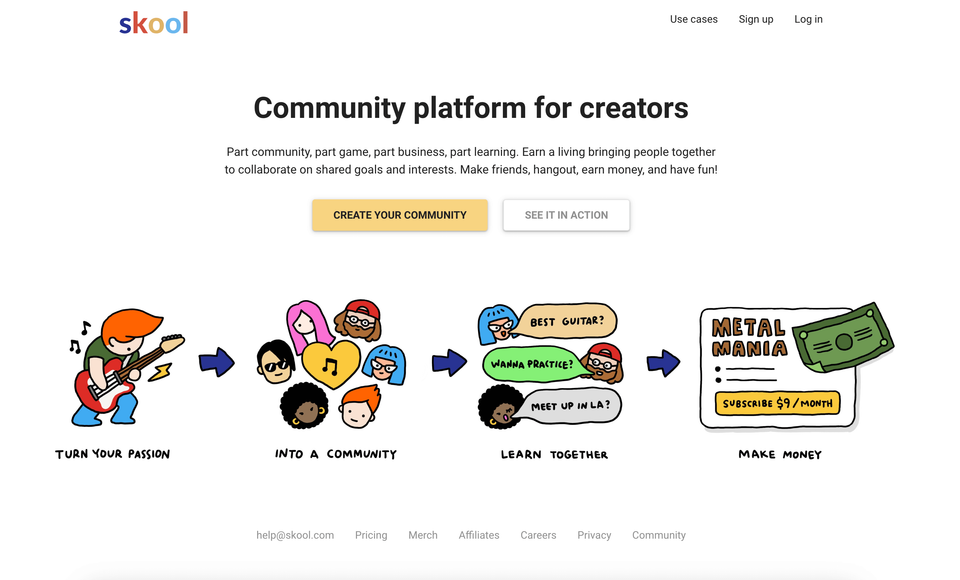
Skool is not a course platform.
Not a social network.
Not a funnel toy.
Building it in Real Time with you

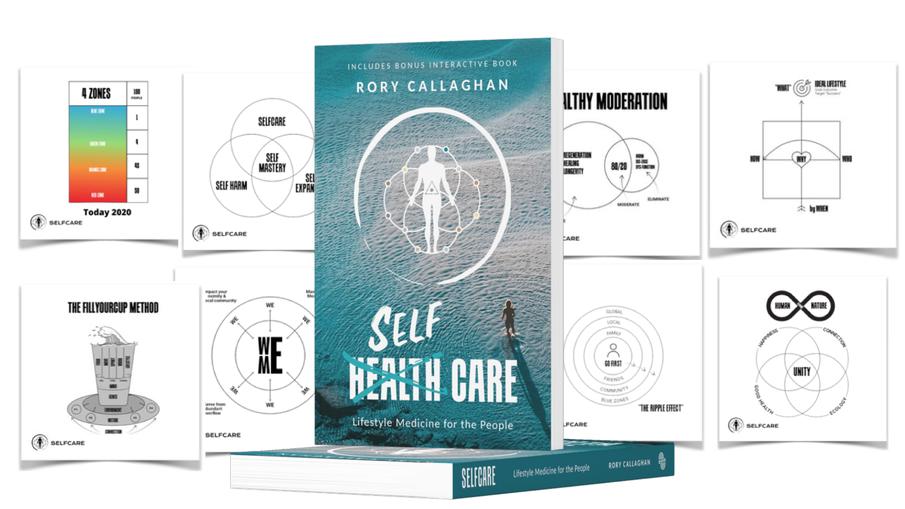
Skool is a retention engine.
At its core, Skool combines:
- Community
- Structured learning
- Habit formation
- Status and identity loops
All inside one simple container.
The model was shaped by Alex Hormozi with one obsession:
Keep people engaged long enough to get real results.
Results drive retention.
Retention drives revenue.
Revenue funds impact.
Everything else is secondary.
The Skool Business Model: The Flywheel Most People Miss
Sell Access, Not Content
People don’t pay for videos.
They pay for:
- Belonging
- Progress
- Accountability
- Proximity to clarity or leadership
Pricing models that actually work:
- Monthly memberships ($20–$200)
- Short containers (30–90 days)
- Paid communities with live cadence
- Free communities feeding into paid depth
Lifetime access breaks the model.
Recurring rhythm sustains it.
Community Is the Product
The content is scaffolding.
The transformation happens between people.
High-retention Skool communities share the same traits:
- Members post early
- Wins are visible
- Questions get answered fast
- Progress is celebrated publicly
If members lurk forever, the system is broken.
Your job is not to teach more.
Your job is to engineer participation.
Curriculum Creates Direction, Not Depth
Skool classrooms work best when they offer:
- Short lessons
- Clear order
- An obvious next step
Think:
- Orientation
- Foundations
- Weekly focus
- Applied action
Depth happens live.
Curriculum prevents overwhelm.
If your classroom feels like Netflix, expect churn.
Gamification Is a Nervous System Tool
Points and leaderboards are not childish.
They regulate behavior.
Used well, they:
- Encourage posting
- Reward contribution
- Signal momentum
- Create identity shifts
Used poorly, they:
- Incentivize noise
- Reward performance over progress
Reward:
- Consistency
- Contribution
- Integration
Not popularity.
How the Best Skool Communities Are Actually Built
One Person. One Problem.
If your Skool is “for everyone,” it’s for no one.
Strong communities are built for:
- One stage of life or business
- One dominant pain
- One desired outcome
Clarity creates safety.
Safety creates participation.
One Weekly Rhythm
High-performing Skools have a pulse.
For example:
- Monday prompt
- Midweek integration
- Friday reflection
Members should always know:
What happens here this week?
Chaos kills retention.
Visible Wins
Transformation must be seen.
Do this relentlessly:
- Screenshot wins
- Pin progress
- Celebrate effort, not perfection
People stay where progress is obvious.
The Founder Sets the Tone
Your presence matters more than your expertise.
Early on:
- Reply fast
- Model vulnerability
- Post consistently
- Name what you see
Later:
- Let leaders emerge
- Spotlight members
- Reduce dependence on you
A Skool fails when the founder disappears too early.
It plateaus when the founder never steps back.
The Deeper Intent Behind Skool
Education failed because:
- People learned alone
- Knowledge had no container
- Progress had no witness
Skool fixes this by design.
The platform rewards:
- Doing over consuming
- Belonging over broadcasting
- Practice over performance
If your intention is to:
- Extract value
- Dump content
- Minimize presence
Skool will expose that fast.
If your intention is to:
- Hold people through change
- Create momentum
- Build identity and skill together
Skool becomes powerful.
The One Strategic Question That Matters
Before you build a Skool, ask:
What transformation does someone experience in 30 days if they show up fully?
If you can’t answer that cleanly — don’t build yet.
Skool doesn’t fix unclear leadership.
It amplifies it.
Where This Philosophy Is Already Being Practiced
You can see this model applied in real time inside our ecosystem:
- SelfCare Skool Community:
https://www.skool.com/selfcare-5591/about - The broader SelfCare ecosystem:
https://www.selfcare.global/ - Facilitated by: Rory Callaghan
https://rorycallaghan.com/
This isn’t content-first education.
It’s container-first transformation.