Be It As You Become It | Identity & Persona' Brand
Who's left when there's nothing more to release?
If everything you've been told to be fell away tonight, who would still be standing here?
The law of subtraction
What are you still carrying that was never yours?
What would be left if you put it down?
The law of the overwrite
Which voice in your head was never actually yours?
Who taught you to be who you're being?
The law of remembrance
Who was I before the world told me who to be?
When did you last feel like yourself, with no one watching?
What did you know as a child that you've spent years unlearning?
The law of aliveness
What calls me?
What brings joy?
What makes me feel alive?
When does life feel like play, not pressure?
What lights you up, even when no one's paying you to do it?
The law of meaning
Why am I here?
What actually matters?
What would you do even if it earned you nothing?
What would you regret never having lived?
The law of your own success
What does success mean to me?
Whose definition of success have you been chasing?
What would "enough" actually feel like in your body?
The law of being it
Who would you be if you stopped waiting for permission?
What would change if you lived as that person today, not someday?
The law of we
Who rises when you do?
What becomes possible for the room when you come home to yourself?
The law of the breath — the close
Who's here, right now, beneath the noise?
Will you live today as them, or as who you were told to be?
Who was I before the world told me?
TOOL: Personal "Soul Brand" Architect
Use this GPT and answer he questions from this blog, add your real story, your why statements, your achievements, your wisdom, lessons, truth and see what it creates as a final refelction.


Why the deepest identity change is subtraction, not addition. And remembrance, not performance.
There is a moment that comes for almost everyone who has done the work.
You have read the books. Sat the courses. Done the morning routines and the cold plunges and the journaling. And still, quietly, something reverts. The old pattern returns. The breakthrough fades. A few weeks later you are back where you started, wondering what you did wrong.
I want to offer you something gentler than another technique.
You did nothing wrong. You were simply adding, when the work was always to subtract.
The question underneath all the others
Most change asks: who do I want to become?
But there is an older question. The one that waits underneath, the one you can only hear when the noise finally drops.
Who was I, before the world told me who to be?
That one is not ahead of you. It is underneath you. And the whole of lasting change turns on it.
The short answer: Durable change is not built by adding a new identity on top of the old one. It comes from removing what was never yours, returning to the self underneath the conditioning, and living from it before it feels comfortable. You do not perform your way into a new self. You remember your way back to a true one. Behaviour that flows from identity holds. Behaviour forced against it reverts.
Why this matters now
We live in a culture of addition. More habits, more optimisation, more versions of you to install. The shelves are full of better selves for sale.
And yet the data on how people actually change tells a quieter story. Outcome-based change carries a flaw no willpower can fix. You diet until you reach the number. You hustle until you hit the goal. And the moment the external pressure lifts, the old self-concept reasserts itself, because it was never the contents that needed changing. It was the one holding them.
This is why four days of releasing, healing, and reconnecting can feel profound and still not hold. The release is real. But release is still framed as getting somewhere new. There is nowhere new to get. There is only what remains when you stop covering it.
The core insight
You are not a project to be built.
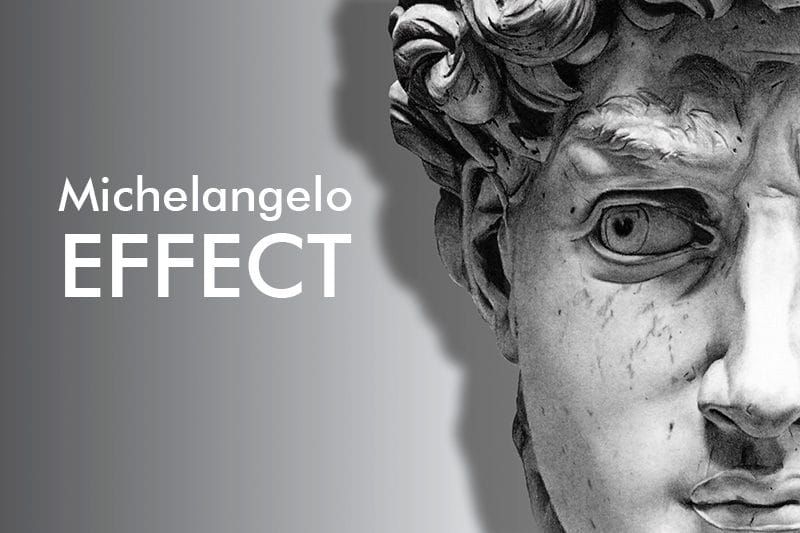
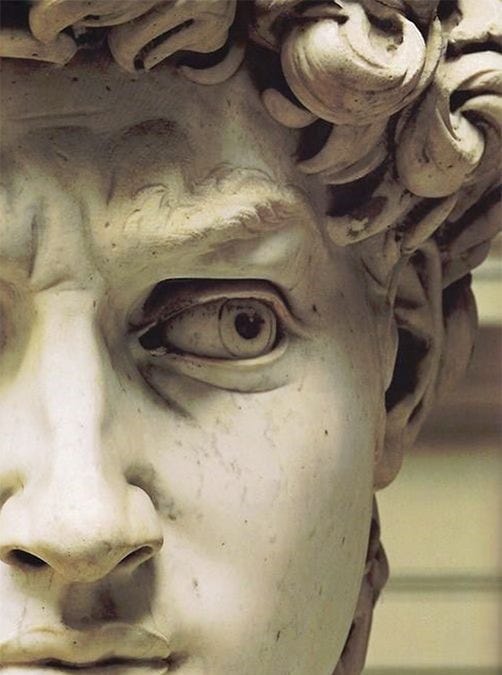
You are a sculpture already inside the stone.
The conditioning is paint, not the wall. The roles, the shoulds, the borrowed definitions of success, the voice in your head that was never actually yours. None of it is the foundation. It is the layer over the foundation.
So the work was never add more. It was always remove what isn't you.
And what is left when the removing is done is not nothing. It is the one who was there before the first identity formed, and who will be there after the last one dissolves.
You cannot reset that. You can only return to it.
The framework: the seven laws of remembrance
A simple descent. Not steps to climb, layers to put down. Move through them slowly, one at a time.
- The law of subtraction. No one can give you a better you. They can only help you set down a heavier one. Ask: what am I still carrying that was never mine?
- The law of the overwrite. The world told you who to be, layer over layer, until the telling felt like truth. Ask: which voice in my head was never actually mine?
- The law of remembrance. You do not become someone new. You return to someone true. Ask: when did I last feel like myself, with no one watching?
- The law of aliveness. The body knows before the mind agrees. Follow what brings life. Ask: what lights me up, even when no one is paying me to do it?
- The law of your own success. The world handed you a scoreboard you never agreed to. Ask: whose definition of enough have I been chasing?
- The law of being it. You cannot fake a self, the win would belong to the mask. You be the true one, before it is comfortable. Be it, as you become it.
- The law of we. You did not come home to yourself to stay there alone. A regulated you makes the room more regulated. You return to you, so we rise together.
How to live it today
This is not a plan. It is one breath.
Tomorrow morning, before you touch your phone, before you become useful to anyone, sit for one minute. Just your breath. No one watching. And ask: who's here?
Do not answer in words. Just notice who is still there when there is nothing to perform and no one to perform for. Then let your day be lived as them, not as who you were told to be.
The reason this works is not mystical. Slow, conscious breathing shifts the body out of fight-or-flight and into rest, which is the only state from which you can hear the quieter self at all. You cannot remember who you are while braced. The breath unbraces you.
What the evidence says
This is not only a felt truth. The research holds it.
Behaviour that aligns with self-concept persists. Behaviour that does not, reverts. A meta-analysis on the role of self-identity in the theory of planned behaviour found self-identity meaningfully correlated with sustained behaviour, independent of intention alone (Rise, Sheeran & Hukkelberg, Journal of Applied Social Psychology, 2010). This is the mechanism behind the yo-yo: when the goal is reached and pressure lifts, the unchanged identity pulls the old behaviour back.
The same literature shows the reverse is the lever. Each repeated action that matches a desired self-concept casts a small vote for it, and over time the self-image and the behaviour reinforce each other, requiring less and less effort (Clear, Atomic Habits, 2018; and the self-perception work of Daryl Bem, who showed we infer who we are by watching what we repeatedly do).
And the breath that opens the door is well evidenced too. A systematic review of slow breathing found it promotes a shift toward parasympathetic, vagal dominance, linking calmer physiology with greater emotional and psychological flexibility (Zaccaro et al., Frontiers in Human Neuroscience, 2018). Even a single five-minute session of slow, deep breathing has been shown to raise vagal tone and lower perceived anxiety (Magnon et al., Scientific Reports, 2021). Stillness is not passive. It is a physiological key.
Where this does not apply
A few honest caveats, so this lands as truth and not slogan.
Subtraction is not avoidance. Removing what was never yours is not the same as removing responsibility, structure, or the discomfort that real growth asks of you. The stone still needs the chisel.
Remembrance is not regression. Returning to the self underneath conditioning does not mean returning to a younger, smaller life. It means meeting the present from a truer place.
And one minute of breath is a beginning, not a treatment. If you are carrying genuine anxiety, depression, or trauma, this practice sits alongside real support, it does not replace it. The body keeps the score, and sometimes it needs more than a breath to settle. There is no shame in that. There is wisdom in it.
The shift
Here is who you become.
Not someone new. Someone true. Not a person performing a better identity until the proof arrives, but a person living from the one that was always underneath, before it feels safe, until the performance simply wears off and only the real one is left.
You stop adding. You start remembering. And the becoming takes care of itself.
One action for the next 24 hours
Tomorrow morning. Before the phone. One minute of breath. One question: who was I before the world told me?
Then live the day as them.
 SelfCare Global Collective
In short
- Lasting change is subtraction, not addition. Remove what was never yours.
- Outcome-based change reverts because the identity underneath never moved.
- You do not perform a new self into being. You remember a true one and live from it before it is comfortable.
- The breath is the door. Calm is the only state the quieter self can be heard from.
- You return to yourself so that we can rise together. Not me. We.
Questions people ask
Is "be it as you become it" just a softer version of "fake it till you make it"? No. They run in opposite directions. Faking it projects a presence you do not have and hopes reality catches up, and the success belongs to the mask. Being it removes the interference covering a self that is already there, and lives from it ahead of the proof. One adds a costume. The other subtracts what was hiding the truth.
If I subtract everything, what is left? Not nothing. The one who notices. The awareness that was present before your first role formed and remains after each one dissolves. Subtraction does not empty you. It uncovers you.
How long until the new identity holds? There is no fixed timeline, because it is not installation, it is erosion. Each time you act from the truer self, a little more of the performance falls away. Some of it goes quickly. Some wears down slowly, like water shaping stone.
Why start with the breath instead of mindset? Because you cannot think your way into a settled self while your body is braced. Slow breathing shifts you toward a parasympathetic, rest state, and only from there can the quieter self be heard. State comes before story.
Can identity change really affect outcomes like money or health? Yes, indirectly and durably. When behaviour flows from self-concept rather than willpower, it persists without constant force, and persistent aligned behaviour is what compounds into outer results. The inner shift is what lets the outer change finally hold.
A reflection. The world spent years telling you who to be. You do not need more years becoming someone else. You need one quiet minute remembering who you already are. The door is open. No rush.
So, tomorrow morning, before anything else: who's here?
Celebrate Yourself First (your life CV)

Activate God Within

Remember Why

You're Real Story